You have to answer where is the name of the shop that you have in front of at the map:
http://maps.google.es/maps?hl=es&tab=wl
And the answer is: ABACUS
domingo, 24 de mayo de 2009

domingo, 3 de mayo de 2009
lunes, 23 de marzo de 2009
lunes, 16 de marzo de 2009
Charles Darwin
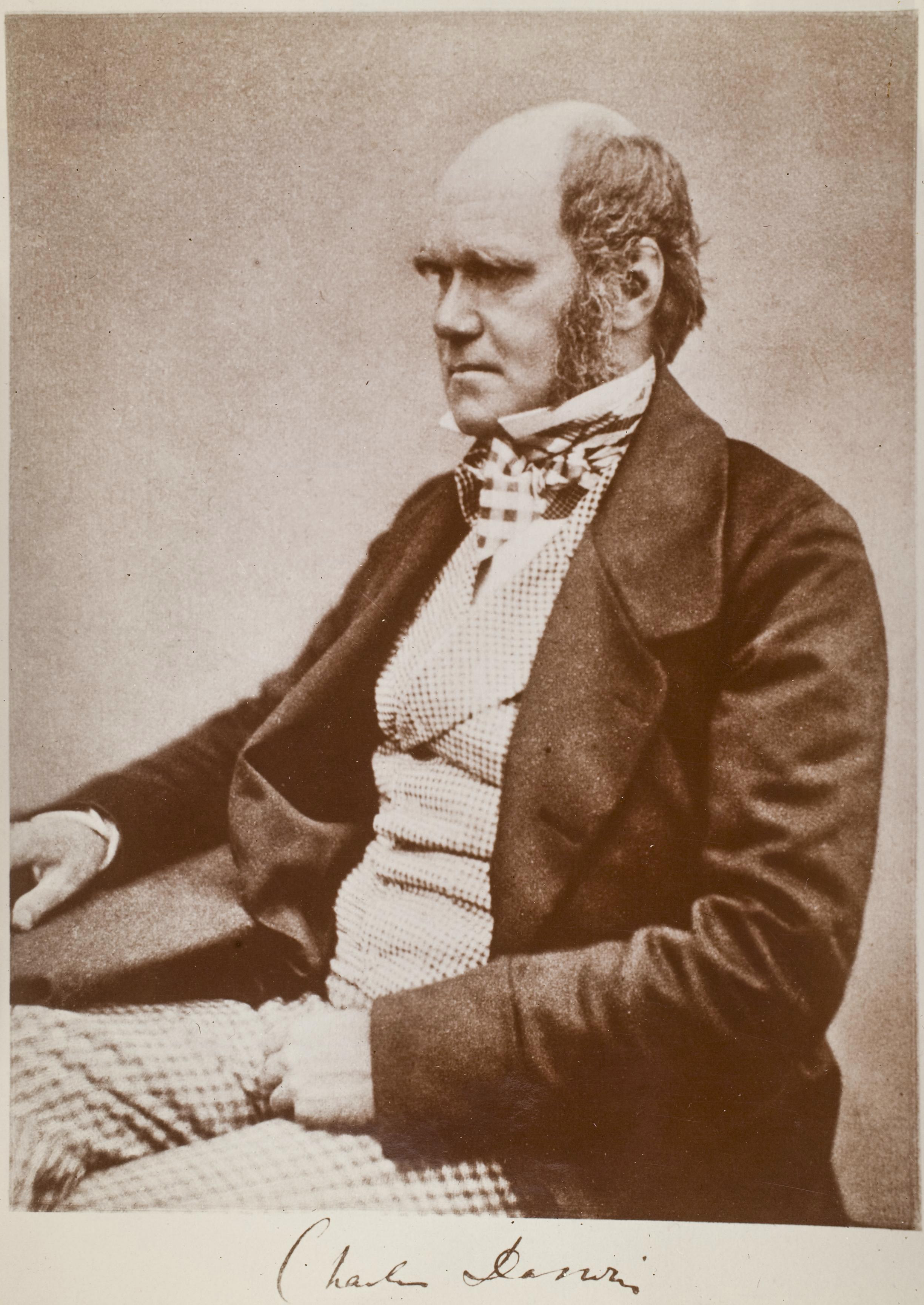
Charles Robert Darwin FRS (12 February 1809 – 19 April 1882) was an English naturalist[I] who realised and presented compelling evidence that all species of life have evolved over time from common ancestors, through the process he called natural selection. The fact that evolution occursscientific community and much of the general public in his lifetime, while his theory of natural selection came to be widely seen as the primary explanation of the process of evolution in the 1930s, and now forms the basis of modern evolutionary theory. In modified form, Darwin’s scientific discovery is the unifying theory of the life sciences, providing logicaldiversity of life. became accepted by the explanation for the
At Edinburgh University Darwin neglected me
dical studies to investigate marine invertebrates, then the University of Cambridge encouraged a passion for natural science. His five-year voyage on HMS Beagle established him as an eminent geologist whose observations and theories supported Charles Lyell’s uniformitarian ideas, and publication of his journal of the voyage made him famous as a popular author. Puzzled by the geographical distribution of wildlife and fossils he collected on the voyage, Darwin investigated the transmutation of species and conceived his theory of natural selection in 1838. Although he discussed his ideas with several naturalists, he needed time for extensive research and his geological work had priority. He was writing up his theory in 1858 when Alfred Russel Wallace sent him an essay which described the same idea, prompting immediate joint publication of both of their theories
Edgar Allan Poe

Edgar Allan Poe (January 19, 1809 – October 7, 1849) was an American poet, short-story writer, editor and literary critic, and is considered part of the American Romantic Movement. Best known for his tales of mystery and the macabre, Poe was one of the earliest American practitioners of the short story and is considered the inventor of the detective-fiction genre. He is further credited with contributing to the emerging genre of science fiction.[1] He was the first well-known American writer to try to earn a living through writing alone, resulting in a financially difficult life and career.[2]
He was born as Edgar Poe in Boston, Massachusetts; his parents died when he was young. Poe was taken in by John and Frances Allan, of Richmond, Virginia, but they never formally adopted him. After spending a short period at the University of Virginia and briefly attempting a military career, Poe parted ways with the Allans. Poe's publishing career began humbly, with an anonymous collection of poems, Tamerlane and Other Poems (1827), credited only to "a Bostonian".


domingo, 1 de marzo de 2009
Project about Shakespeare

Shakespeare's biography:
William Shakespeare was born in 1564 and he was died in 1616. He was an English poet and playwright. He is often called England's national poet and the "Bard of Avon" (or simply "The Bard"). His surviving works consist of 38 plays, 154 sonnets, two long narrative poems, and several other poems. His plays have been translated into every major living language and are performed more often than those of any other playwright.

Shakespeare was born and raised in Stratford-upon-Avon. At the age of 18, he married Anne Hathaway, who bore him three children: Susanna, and twins Hamnet and Judith. Between 1585 and 1592, he began a successful career in London as an actor, writer, and part owner of a playing company called the Lord Chamberlain's Men, later known as the King's Men. He appears to have retired to Stratford around 1613, where he died three years later. Few records of Shakespeare's private life survive, and there has been considerable speculation about such matters as his sexuality, his religious beliefs, and whether the works attributed to him were written by others.
Shakespeare’s plays:
Comedy:
· All's Well That Ends Well
· As You Like It
· The Comedy of Errors
· Cymbeline
· Love's Labours Lost
· Measure for Measure
· The Merry Wives of Windsor
· The Merchant of Venice
· A Midsummer Night's Dream
· Much Ado About Nothing
· Pericles, Prince of Tyre
· Taming of the Shrew
· The Tempest
· Troilus and Cressida
· Twelfth Night
· Two Gentlemen of Verona
· Winter's Tale

History:
· Henry IV, part 1
· Henry IV, part 2
· Henry V
· Henry VI, part 1
· Henry VI, part 2
· Henry VI, part 3
· Henry VIII
· King John
· Richard II
· Richard III
Tragedy:
· Antony and Cleopatra
· Coriolanus
· Hamlet
· Julius Caesar
· King Lear
· Macbeth
· Othello
· Romeo and Juliet
· Timon of Athens
· Titus Andronicus
Poetry:
· The Sonnets
· A Lover's Complaint
· The Rape of Lucrece
· Venus and Adonis
· Funeral Elegy by W.S.
Poems:
· Shakespeare's Sonnets
· Venus and Adonis
· The Rape of Lucrece
· The Passionate Pilgrim
· The Phoenix and the Turtle
· A Lover's Complaint



domingo, 1 de febrero de 2009
Questions!!!
1. Surname of William Shakespeare's wife
2. The most cruel and bloody of Will's tragedies
3. Queen of England during most of Will's life
4. Tragedy set in the Roman Empire
5. Name of the book which collected Will's plays
6. Will's only son
7. Will's mother
8. Will's hometown
9. Name of Will's rival poet.
10.Founder of the Theatre
11.One of Will's most famous tragedies, in which a king has three daughters.
12.A famous theatre close to the Globe
13.Will's first daughter
14.Hamlet's unfortunate girlfriend
15.Will's theatre
16.One of Will's famous tragedy . " Out damn spot. Out, I say !"
17.Tragedy and name of the king who said " A horse. My kingdom for a horse !".
18.Tragedy and name of a man who killed his wife Desdemona for jealousy.
1. Surname of William Shakespeare's wife
2. The most cruel and bloody of Will's tragedies
3. Queen of England during most of Will's life
4. Tragedy set in the Roman Empire
5. Name of the book which collected Will's plays
6. Will's only son
7. Will's mother
8. Will's hometown
9. Name of Will's rival poet.
10.Founder of the Theatre
11.One of Will's most famous tragedies, in which a king has three daughters.
12.A famous theatre close to the Globe
13.Will's first daughter
14.Hamlet's unfortunate girlfriend
15.Will's theatre
16.One of Will's famous tragedy . " Out damn spot. Out, I say !"
17.Tragedy and name of the king who said " A horse. My kingdom for a horse !".
18.Tragedy and name of a man who killed his wife Desdemona for jealousy.
| 1 | H | a | t | h | a | W | a | y | | | | | | | | |||
| 2 | | | | | | T | I | t | u | s | | | | | | | ||
| 3 | | | | | | E | L | i | z | a | b | e | t | h | | | ||
| 4 | | | | | J | u | L | i | u | s | | C | a | e | s | a | ||
| 5 | | | | | | F | I | r | s | t | | F | o | l | i | o | ||
| 6 | | | | | | H | A | m | n | e | t | | | | | | ||
| 7 | | | | | | | M | a | r | y | | A | r | d | e | n | ||
| | | | | | | | | | | | | | | | ||||
| 8 | | | | | | | S | t | r | a | t | f | o | r | d | | ||
| 9 | | | | | C | H | r | i | s | t | o | p | h | e | r | |||
| 10 | | | B | u | r | b | A | g | e | | | | | | | | ||
| 11 | | | | | | | K | i | n | g | | L | e | a | r | | ||
| 12 | | | | R | o | s | E | | | | | | | | | | ||
| 13 | | | | | | | S | u | s | a | n | n | a | | | | ||
| 14 | | O | P | h | e | l | i | a | | | | | ||||||
| 15 | | | G | l | o | b | E | | | | | | | | | | ||
| 16 | | | | | | M | A | c | b | e | t | h | | | | | ||
| 17 | | | | | | | R | i | c | h | a | r | d | | | | ||
| 18 | | | | O | t | h | E | l | l | o | | | | |||||
domingo, 25 de enero de 2009
Obama White House
http://www.guardian.co.uk/world/interactive/2008/dec/16/barack-obama-administration
Click to this link to see information about Obama
Click to this link to see information about Obama
domingo, 18 de enero de 2009
The sixwives of Henry
| Name :Anne Boleyn Fate :Beheaded at the Tower of London on May 19, 1536 after being charged with adultery. | Children :Elizabeth I Wife Number : 2 | |
| | Name :Jane Seymour Fate :On October 24, 1537, Jane died from complications of childbirth. Jane is the only one of Henry's wives to share his grave. | Children : Edward VI Wife Number :3 | |
| | Name :Anne of Cleves Fate :Henry divorced her and Anne received a nice sum of money, an estate, and the title of "King's Sister". | Children : None Wife Number :4 | |
| | Name :Catherine of Aragon Fate :Henry divorced her, having their marriaged anulled. Catherine was banished from the kingdom and lived in seclusion until the time of her death. | Children : Mary I Wife Number : 1 | |
| | Name :Catherine Parr Fate :She outlived Henry.On September 7, Catherine died of complications from the childbirth. | Children :None Wife Number :6 | |
| | Name :Catherine Howard Fate : Beheaded at the Tower of London , charged with treason | Children :None Wife Number : 5 | |


Tudor London
Tudor London can be described as a prosperous, bustling city during the Tudor dynasty. In fact, the population increased from 75,000 inhabitants with Henry VII to 200,000 at the end of the 16th century.
The Tudor monarchs had a royal residence in London called Whitehall Palace and another in the countryside,called Hampton court , after Cardinal Wolsey gave it to Henry VIII.These Tudor kings and queens used what are now famous parks , such as Hyde Park or St. James's Park , as Royal Hunting forests.
Not many Tudor buildings survive today, mostly because of The Great Fire , which happened in 1666. Besides, , the 13 religious houses in London were __ converted for private use or pulled down for building materials____ after the Dissolution of the monasteries, which was Henry VIII's most decisive step against the power of the church in 1538. First the small, less powerful houses had their property confiscated and their buildings blighted (made unsuitable for use). They were followed the next year by the large houses.
Philosophical concepts of the power of the king over church may have played a part in Henry's decision to suppress the monasteries, but so did greed. The monasteries were rich, and a lot of that wealth found its way directly or indirectly to the royal treasury. Some of the monastery buildings were sold to wealthy gentry for use as country estates. Many others became sources of cheap building materials for local inhabitants. One of the results of the Dissolution of the Monasteries is that those who bought the old monastic lands were inclined to support Henry in his break with Rome, purely from self interest.
Apart from that, the theatres were banned from the city by the city authorities or guilds because plays wasted workmen's time ( so it wasn't for religious objection to the play's contents ). Then, they were built in the Southwark, where now a reconstruction of the Globe can be visited to learn about Tudor theatre.
At that time, London's financial rival was the city of Amsterdam, and to be able to compete with it , an international exchange was created in 1566.
(It was founded by the mercer Thomas Gresham in 1566 to enable London to compete for financial power with Amsterdam. This became the Royal Exchange in 1560, and is now housed in a massive Victorian building beside the Bank of England Museum in Mansion House Square.)
So, all in all, and because of many other events and facts, we can say that both London and England were powerful.
Sumarise of Romeo and Juliet
Shakespeare wrote Romeo and Juliet in 1595. This love story is the oldest version that we know but there are more versions before that. For example: Les Efesíaques wrote for Xenofont, or Cinquante Novelle wrote for Masuccio Salernitano, or Historia novellamente ritrovata di dui nobili amanti wrote for Luigi da Porto, or Novelle wrote for Matteo Bandello or Troilus and Criseyde wrote for Arthur Brooke. The changes that Shakespeare introduced, are very significant.
Romeo and Juliet has more than 3000 verses.
Romeo and Juliet has more than 3000 verses.
domingo, 11 de enero de 2009
Poem of Romeo and Juliet
Juliet, Juliet
I love you so much!
Do you love me?
I can't live without you,
please come with me
to the paradise?
Romeo, Romeo
This is amazing
I can't belive your words
My answer is Yes! I want to come
with you to the paradise
I love you!

by P4L0U''
lunes, 1 de diciembre de 2008
TRIP to STRATFORD-UPON-AVON
I proposed you this trip. It's cheap and you are going to visit a lot of places.
I chosed your plane in this web: http://www.edreams.es/edreams/espanol/amadeus3/FareItineraryView.jhtml;$sessionid$GFEFPFVONRC4XQFISY2CFEWAVCLC0IV0?mktportal=google&_requestid=67604
The price is 395,73 €
You arrived in Birmingham at 21:40 . You have to go to DAYS INN HOTEL- WARWICK NORTH (M40). You can take a take in the airpot to go to the hotel.
You have to wake up early. You visit the Royal Shakespeare Theatre. This is a classical visit to the Cotswolds, the center of Shakespearean theater, should include taking in a play at this famous theater and a backstage tour to get an intriguing insight into props and costumes.
I chosed your plane in this web: http://www.edreams.es/edreams/espanol/amadeus3/FareItineraryView.jhtml;$sessionid$GFEFPFVONRC4XQFISY2CFEWAVCLC0IV0?mktportal=google&_requestid=67604
The price is 395,73 €
| Arrival Date | No. of nights | No. of Rooms | Total price you'll pay at the hotel |
|---|---|---|---|
| 05/12/2008 | 3 | 1 | £89.90= 140 euros |
You arrived in Birmingham at 21:40 . You have to go to DAYS INN HOTEL- WARWICK NORTH (M40). You can take a take in the airpot to go to the hotel.
You have to wake up early. You visit the Royal Shakespeare Theatre. This is a classical visit to the Cotswolds, the center of Shakespearean theater, should include taking in a play at this famous theater and a backstage tour to get an intriguing insight into props and costumes.
lunes, 17 de noviembre de 2008
Topics of Britian
THE BEATLES

The Beatles were a pop and rock band from Liverpool, England formed in 1960. Primarily the band consisted of John Lennon (rhythm guitar, vocals), Paul McCartney (bass guitar, vocals), George Harrison (lead guitar, vocals) and Ringo Starr (drums, vocals). Throughout their career, The Beatles are recognised for leading the mid-1960s musical "British Invasion" into the United States. Although their initial musical style was rooted in 1950s rock and roll and homegrown skiffle, the group explored genres ranging from Tin Pan Alley to psychedelic rock. Their clothes, styles, and statements made them trend-setters, while their growing social awareness saw their influence extend into the social and cultural revolutions of the 1960s. After the band broke up in 1970, all four members embarked upon solo careers.
This information it was extracted of wikipedia page.
LONDON EYE

The London Eye (Millennium Wheel) at a height of 135 metres (443 ft) [1], is the biggest Ferris wheel in Europe, and has become the most popular paid tourist attraction in the United Kingdom, visited by over 3 million people a year.[2] At the time it was erected it was the tallest Ferris wheel in the world, until it was surpassed by the Star of Nanchang (160m) in May 2006, and then the Singapore Flyer (165m) on February 11, 2008. However, it is still described by its operators as "the world's tallest cantilevered observation wheel" (because the entire structure is supported by an A-frame on one side only).[3]
The London Eye is located at the western end of Jubilee Gardens, on the South Bank of the River Thames in London.

lunes, 10 de noviembre de 2008

Obama

Map of USA
In the USA there are two important candidats to be president. MCCain and Obama

McCain is republican. He lost the elections versus Obama.
 The map of USA to show votes to Obama or McCain.
 Obama won the eleccions of the USA.
His tipical sentence is " Yes, we can! "

lunes, 3 de noviembre de 2008
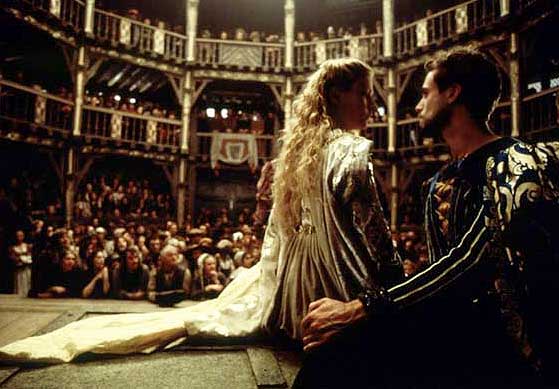
Structure of Globe
The Structure and Design of the Globe Theatre Globe AmphitheatreOpen arena design & structure - actors would also get wet if it rained!Size of amphitheatres Structure & Dimensions - Up to 100 feet in diameterVarying Shapes Octagonal structure , circular in shape having between 8 and 24 sidesGlobe Building materialsStructure - Timber, nails, stone (flint), plaster and thatched roofs. Later amphitheatres had tiled roofs Globe Building Duration6 months to build the structure Overall design and structure of the Globe TheatreThe open air arena, called the 'pit' or the 'yard', had a raised stage at one end and was surrounded by three tiers of roofed galleries with balconies overlooking the back of the stage. The stage projected halfway into the 'pit'Globe Audience Capacity1500 plus audience capacity. Up to 3000 people would flock to the theatre and its groundsThe Grounds of the Globe theatreBustling with people & potential audience. Stalls selling merchandise and refreshments. Attracted non playgoers to the marketToilet FacilitiesNone . People relieved themselves outside. Sewage was buried in pits or disposed of in the River Thames. All theatres closed during outbreaks of the Bubonic Plague - disease would have spread via the rats & fleasThe Entrance to the Globe theaterStructure - Usually one main entrance. Some later theatres had external staircases in their structure to access the galleriesThe crest and motto of the Globe TheatreAbove the main entrance of the Globe was a crest displaying Hercules bearing the globe on his shoulders together with the motto "Totus mundus agit histrionem" (the whole world is a playhouse). This phrase was slightly re-worded in the William Shakespeare play As You Like It - "All the world’s a stage".The 'Box 'Playgoers put 1 penny in a box at the theatre entranceAccess to the Balconies & GalleriesTwo sets of stairs in the structure, either side if the theater. The first gallery would cost another penny in the box which was held by a collector at the front of the stairs. The second gallery would cost another penny The Globe 'Box Office'At the start of the play after collecting money from the audience the admission collectors put the boxes in a room backstage - the box office. The ' Housekeepers 'The owners of the Globe theatreThe interior design and structure of the Globe TheatreDesign and structure was similar but far smaller version (1500 -3000 audience capacity) than the Coliseum of the Roman period (50,000 audience capacity) allowing the maximum number of playgoers in the space availableGlobe Theatre LightingNatural lighting as plays were produced in the afternoon. However there was some artificial lighting mainly intended to provide atmosphere for night scenesHeatingThere was no heating. Plays were performed in the summer months and transferred to the indoor playhouses during the winterStage dimensionsDimensions - Cannot be specific for the Globe. Stage dimensions varied from 20 foot wide 15 foot deep to 45 feet to 30 feetThe height of the stageDimensions - A raised stage - 3 to 5 feet and supported by large pillarsThe floor of the StageMade of wood, sometimes covered with rushes. Trap doors would enable some special effects e.g. smokeThe rear of the StageA roofed house-like structure was at the rear of the stage, supported by two large columns (pillars) The ' Herculean ' columns or pillars The ' Herculean ' pillars were made of huge, single tree trunks. These were drilled through the centre to eliminate warping of the woodThe ' Heavens ' - a roof areaThe pillars supported a roof called the ' Heavens 'The ' Heavens 'The ' Heavens ' served to create an area hidden from the audience. This area provided a place for actors to hide. A selection of ropes & rigging would allow for special effects, such as flying or dramatic entriesThe stage wall called the ' Frons Scenae ' taken from LatinBehind the pillars was the stage wall called the ' Frons Scenae ' (taken from the name given by Imperial Rome to the stage walls of their amphitheatres). A doorway to the left and right and a curtained central doorway from which the actors made their entrances. Above the door area was a highly decorative screen The Stage Gallery above the Stage Wall
The ' Lord's rooms 'Immediately above stage wall was the stage gallery that was used by actors (Juliet's balcony) & the rich the nobility - known as ' Lord's rooms.'The ' Lord's rooms 'Considered the best seats in the ' house ' despite the poor view of the back of the actors. The audience would have a good view of the Lords. And the Lords were able to hear the actors clearly. The cost was 5 pence & cushioned seats were providedMusiciansMusic was an extra effect added in the 1600's. The musicians would also reside in the Lords roomsThe ' Gentlemen's rooms 'There were additional balconies on the left and right of the ' lord's rooms ' which were called the ' Gentlemen's rooms '. For rich patrons of the Globe theater - the cost was 4 pence & cushioned seats were providedThe ' Tiring House 'The stage wall structure contained at least two doors which lead to a leading to small structure, back stage, called the ' Tiring House '. The stage wall was covered by a curtain. The actors used this area to change their attireThe ' Hut 'Above the ' Tiring House ' was a small house-like structure called the 'hut' complete with roof. Used as covered storage space for the troupeElizabethan advertisingAbove the hut was a small tower with a flag pole. Flags were erected on the day of the performance which sometimes displayed a picture advertising the next play to be performed. Colour coding was also used
- a black flag meant a tragedy , white a comedy and red a history.The ' yard 'The stage structure projected halfway into the ' yard ' where the commoners (groundlings) paid 1 penny to stand to watch the play. They would have crowded around the 3 sides of the stage structure. GroundlingsCommoners who paid 1 penny admission to stand to watch the play' Stinkards 'During the height of the summer the groundlings were also referred to as ' stinkards ' for obvious reasonsAccess to the GalleriesTwo sets of stairs, either side if the theater structure . The stairways could also be external to the main structure to give maximum seating spaceSeats in the galleries - Three levels Structure - The seats in each of the three levels of galleries were tiered with three rows of wooden benches, increasing in size towards the back, following the shape of the building and structure. The galleries were covered affording some shelter from the elements.
Suscribirse a:
Entradas (Atom)


